Online therapy across Ontario
EMDR Therapy
Are there memories that still hit as hard as the day they happened? EMDR helps your brain process them, so they lose their grip on how you feel today.
Book a Free Consultation (opens in a new tab)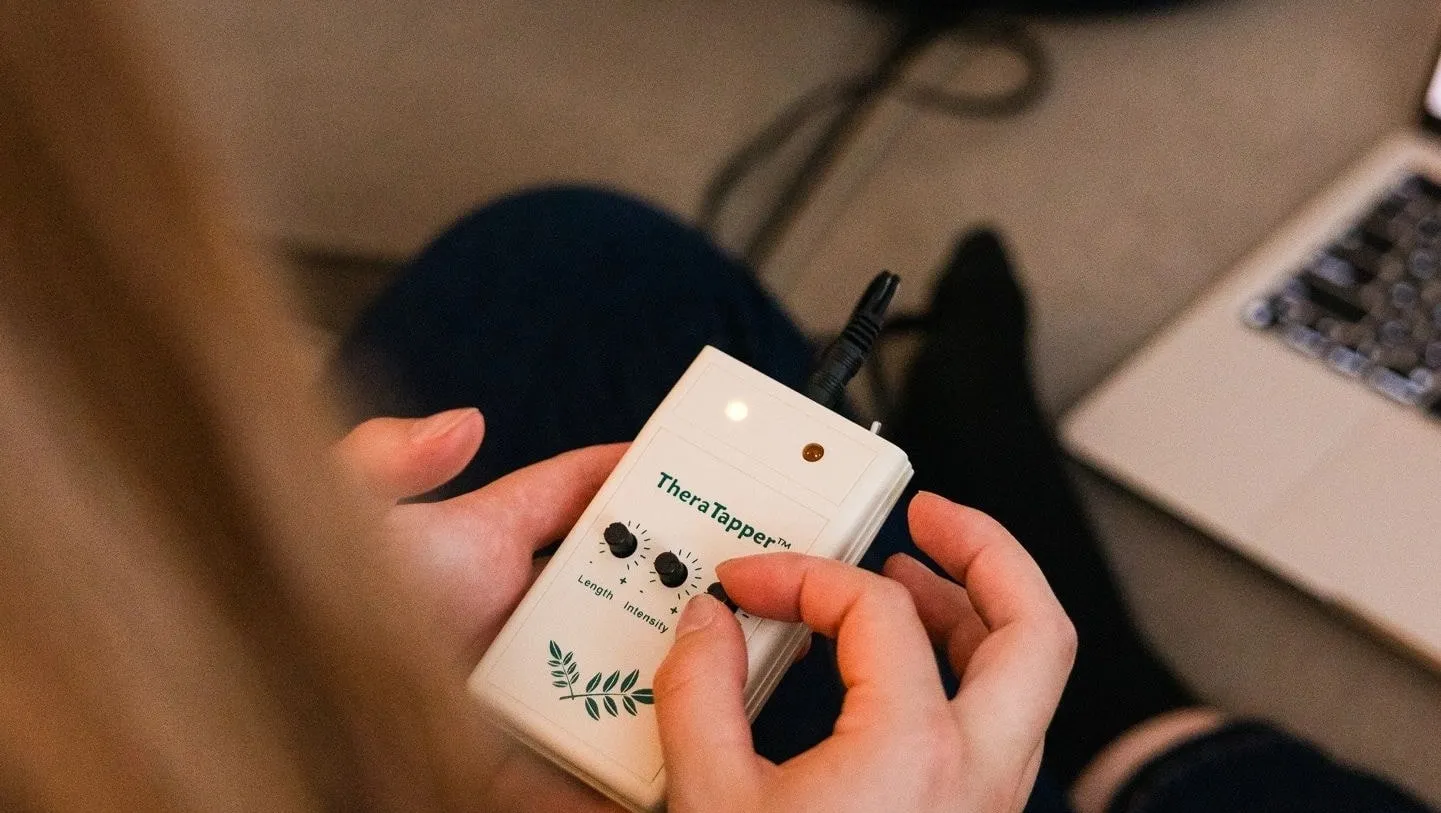
Who EMDR can help
Does the past keep showing up in your present?
EMDR (Eye Movement Desensitization and Reprocessing) is best known for treating trauma and PTSD. It can also help when anxiety, low mood or harsh beliefs about yourself trace back to experiences you haven’t fully processed.
Many people come to EMDR after talk therapy helped them understand what happened, while the feelings still show up as strongly as ever.
EMDR can help even if you’ve tried therapy before.

Virtual sessions
You can do EMDR from your own living room
All of our EMDR sessions are by secure video. The eye movements or tapping used in EMDR work on screen too, and you get to work through hard memories from a space where you already feel comfortable.
Research on online EMDR is still growing, and the early results are encouraging. A 2023 review of 16 studies found promising reductions in PTSD symptoms, anxiety and depression with remote EMDR.[1] (source, opens in a new tab)
Before we start, we’ll make sure you have a private space and ways to settle yourself after each session.

How it works
EMDR helps your brain finish processing stuck memories
Think of a file that never finished downloading: every time you open it, it glitches. EMDR uses bilateral stimulation, like guided eye movements or tapping, to help your brain finish the download, so the memory loses its charge.
Get ready
We start by building calming and grounding skills, so you feel steady before working on any memory.
Work through a memory
We focus on one memory at a time while you follow eye movements or tapping, and notice what comes up.
Settle and strengthen
We build up healthier beliefs about yourself, and every session ends somewhere calm.

What changes
Think about the past without reliving it
People often notice that a memory feels further away, more like an image than a replay. We go at a pace your nervous system can handle.
Less intense memories
Think about what happened with less fear, panic or shame, even when the memory still comes up.
Calmer reactions
Respond to triggers with more calm, instead of being swept back into the moment it happened.
Kinder beliefs
Replace beliefs like “I’m not safe” or “It was my fault” with ones that feel true and fair to you now.
Better sleep
Have fewer nightmares and rest more easily once your body stops bracing for danger every night.
More like yourself
Reconnect with the parts of yourself, and your life, that the past has been overshadowing.

Our approach
Well-studied therapy, at a pace that feels manageable
Sessions are warm and collaborative, and nothing moves faster than you’re ready for. EMDR is one of the most researched treatments for trauma, and the World Health Organization recommends it for PTSD. We often combine it with CBT, ACT or DBT skills, depending on what you need.

Perinatal Mental Health Certified (PMH-C)
Postpartum Support International

EMDRIA Certified Therapist
EMDR International Association
A plan built around you
We draw from several approaches and shape a plan around your goals, rather than a one-size-fits-all program.
Perinatal expertise too
I also hold the Perinatal Mental Health Certification (PMH-C), so you can bring a hard birth, a loss or fertility struggles to EMDR.
Sessions anywhere in Ontario
Sessions are by secure video, so you can join from home or another private space. Saturday appointments are available too.


Nicole Graff-Rowe
MSW, RSW · PMH-C · EMDRIA Certified Therapist
- Online sessions, anywhere in Ontario
- Based in Waterloo Region
- No referral needed
About your therapist
Hi, I’m Nicole, a Registered Social Worker and EMDR Certified Therapist
I started Nurtured Family Counselling so people have somewhere to say the hard things out loud without being judged. Here, you can stop holding it all together for an hour.
I want to understand your history, your struggles and your story, and help you move forward in a way that’s rooted in your own values and goals.
I love EMDR because it taps into your brain’s natural ability to heal. I’ll explain each step as we go, so the process never feels mysterious.
FAQ
Questions people ask before booking
It’s normal to have questions before reaching out. If yours isn’t here, you can send us a message.
What does an EMDR session feel like?
You bring up part of a memory while following eye movements or tapping, then notice what comes up. It can feel intense at times, and we always end the session somewhere calm. For more detail, read EMDR therapy explained.
Do I have to talk about the memory in detail?
No. You only need to share the headline of what happened. Your brain already knows the details.
Does EMDR work online?
Yes. Early research on online EMDR is encouraging, and all of our EMDR sessions are by secure video.
How many sessions will I need?
It depends on what you’re working on and the support you have. Preparation may take one or two sessions, or longer for complex trauma. In trauma work, slow is often the fastest way forward.
Is EMDR right for everyone?
Not always right away. If you’re in a crisis, living somewhere unsafe or relying on substances to cope, we may focus on stability and coping skills first. We’ll decide together when the timing is right.
Can EMDR help with birth trauma?
Yes. EMDR is one of the main ways we treat birth trauma, and it can help after a pregnancy loss too. You can read more about birth trauma therapy.
Is EMDR covered by insurance?
Many workplace health plans cover therapy with a Registered Social Worker, and you don’t need a referral to book. Fees, receipts and how to check your coverage are on the Fees and insurance page.

Get started
Your brain already knows how to heal.
You don’t need to have all the answers before you begin. We can talk about what you’d like to work on and whether EMDR is a good fit.
Book a Free Consultation (opens in a new tab)